
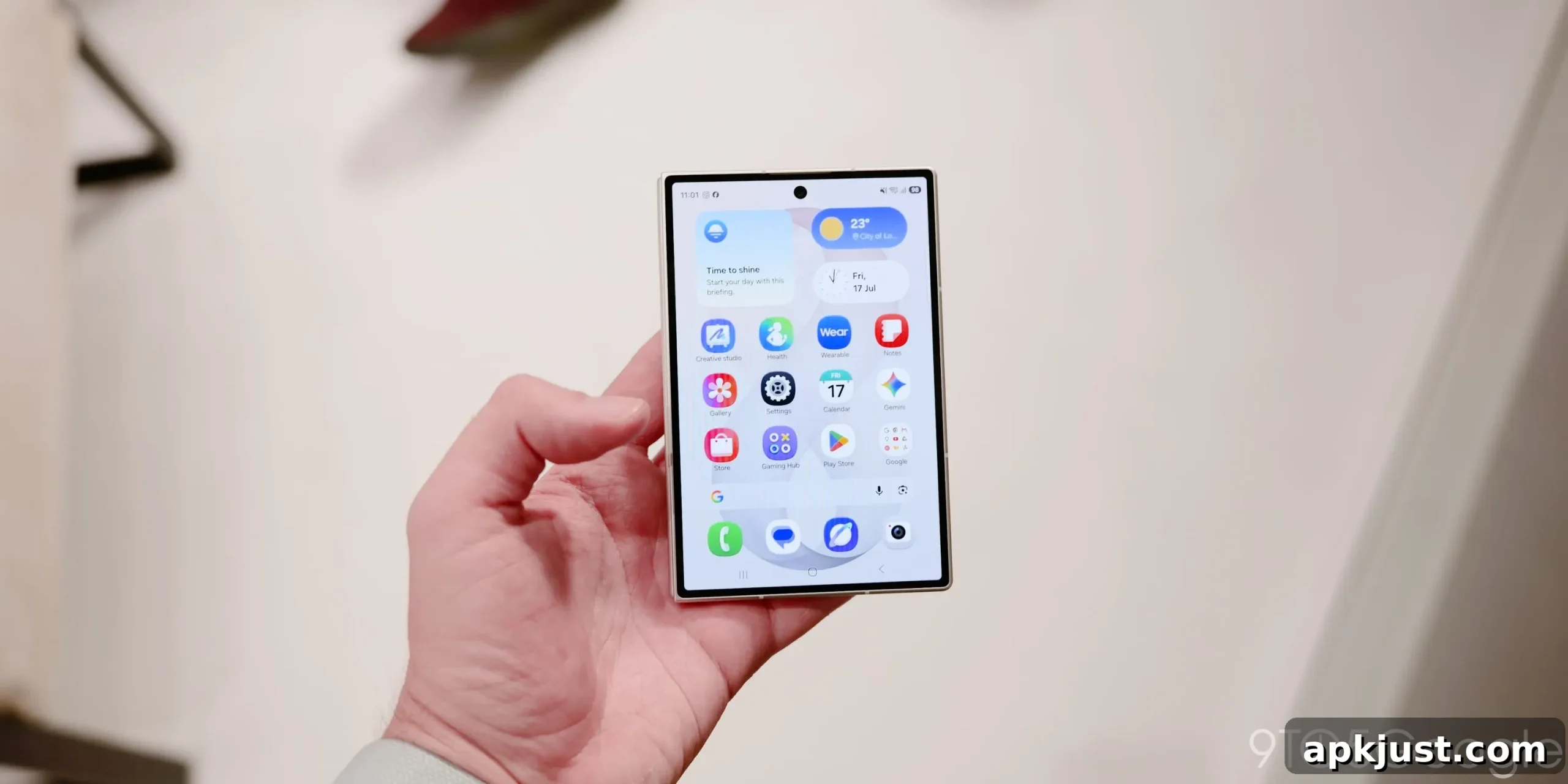
One notable advancement in Samsung’s Galaxy Z Fold 8 lineup is the introduction of silicon-carbon batteries. In a recent private briefing, Samsung offered insight into how it plans to use this battery technology going forward and what factors will guide its adoption across future Galaxy phones.
Silicon-carbon anodes are attractive because they can increase energy density, allowing more capacity in the same physical space. Some manufacturers have used similar materials to push battery sizes to extreme levels in certain devices, but Samsung took a measured approach for the Galaxy Z Fold 8 series. The Fold 8 ships with a 4,800 mAh pack while the Fold 8 Ultra increases that to 5,000 mAh, even though the Ultra is slimmer than its predecessor. That is a meaningful upgrade from the previous 4,400 mAh battery, but Samsung has deliberately balanced capacity gains with safety and longevity.
Samsung’s caution is understandable. Past industry incidents have made manufacturers more conservative with battery rollouts, and Samsung emphasizes that any new chemistry must meet strict standards before it appears in consumer devices. During its briefing, the company reiterated its priority criteria: safety, stability, and long-term usability. Those principles determine whether and how silicon-carbon will be applied across the Galaxy family.
According to Samsung’s translated remarks, the company adopted silicon-carbon anode materials to raise energy density and improve battery performance. The firm said it aims to maximize benefits while minimizing risks, applying new battery technologies only when they reach a maturity level that lets customers use them with confidence:
We applied silicon carbon anode materials to mobile phones for the first time to increase energy density. This played a role in improving battery performance.
Samsung’s firm principles regarding batteries are safety, stability, and long-term usability. We have strived to create batteries that maximize only their advantages, and Samsung applies technology only when it reaches a level where customers can confidently trust and use it safely.
…We will decide whether to apply them depending on the product if the battery can help improve the customer experience.
Put simply, larger capacity is desirable, but Samsung will weigh the trade-offs carefully. Silicon-carbon can enable higher capacities without increasing size, but the company is focused on whether those gains translate into a better user experience over months and years. That includes maintaining safe charging behavior, cycle life, and predictable performance under real-world conditions.
Industry chatter suggests the upcoming Galaxy S27 series may adopt silicon-carbon battery technology. If Samsung does extend silicon-carbon beyond foldables into its mainline Galaxy S phones, that would signal a broader shift in the company’s battery strategy and could make higher-density packs more common across Samsung’s portfolio. Even then, Samsung’s stated emphasis on safety and longevity means any rollout would be gradual and deliberate.
For consumers, the likely outcome is steady improvements in battery capacity and efficiency without compromising device reliability. Users can expect incremental capacity increases in future Galaxy models as Samsung validates silicon-carbon across more products, while continued optimizations in software and power management preserve overall battery health.
Samsung’s approach highlights two important trends in smartphone battery design: first, the pursuit of greater energy density using advanced anode materials; second, the priority of real-world durability and safety over headline-grabbing capacity figures. Those priorities help explain why Samsung chose moderate capacity increases for the Fold 8 family rather than pushing to the extremes seen in some other brands.
More on Samsung:
- Leaks and rumors suggest Samsung’s 2027 flagship roadmap may include new form factors and refreshed lineups.
- Comparisons between the Galaxy Z Fold 8 and the Fold 8 Ultra highlight trade-offs in size, features, and battery choices.
- Early coverage of silicon-carbon batteries notes potential benefits for energy density alongside considerations for longevity and safety.
Follow Ben: Twitter/X, Threads, Bluesky, Instagram