
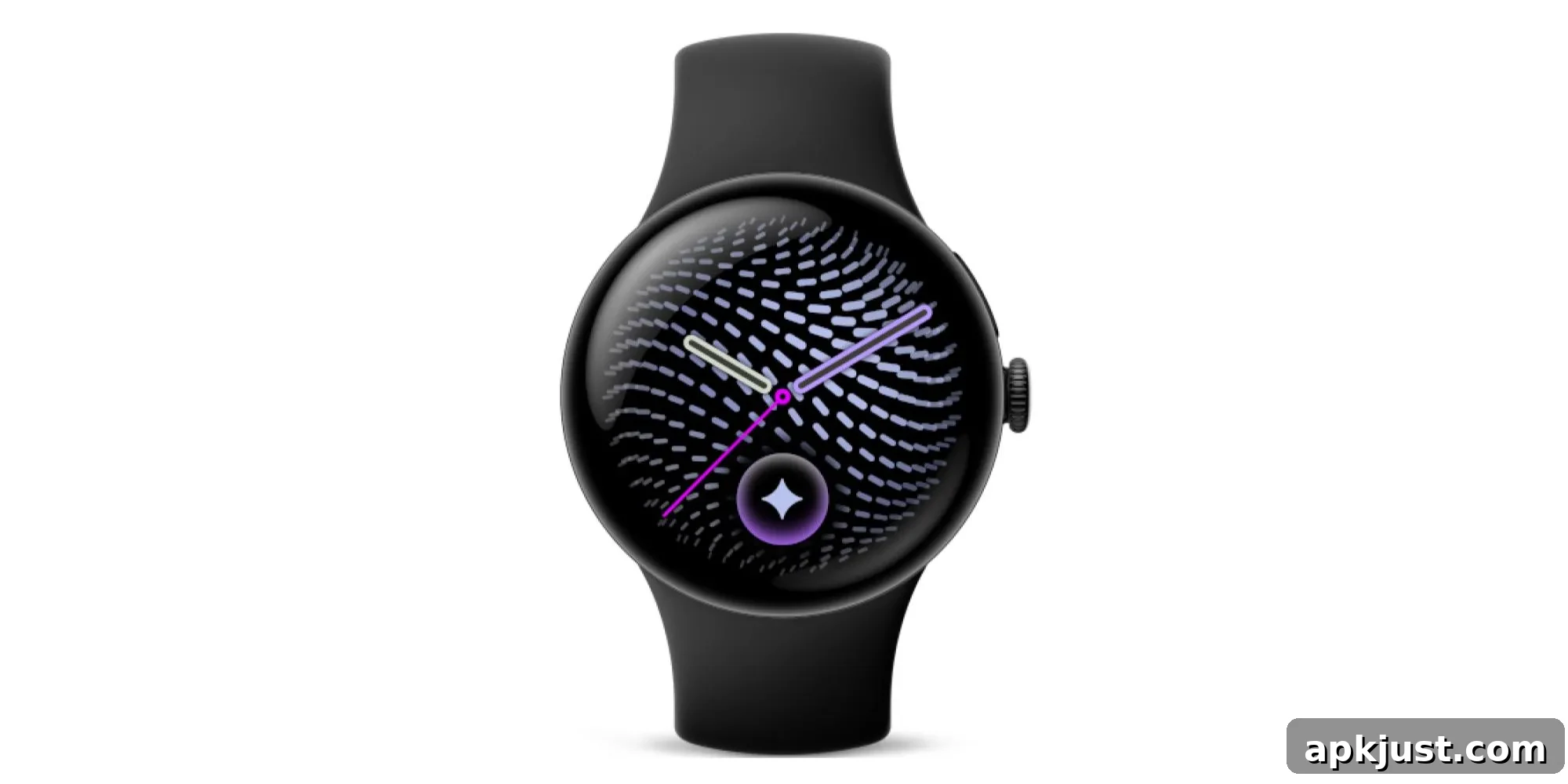
The Pixel Watch 5 appears poised to closely resemble last year’s model in both design and core hardware. Early listings suggest many visible similarities, and recent entries in the Google Play Console hint that Google may also be retaining much of the same platform under the hood. While design continuity can be a comfort for users who liked the previous generation, it also raises questions about performance and feature evolution compared with competitors.
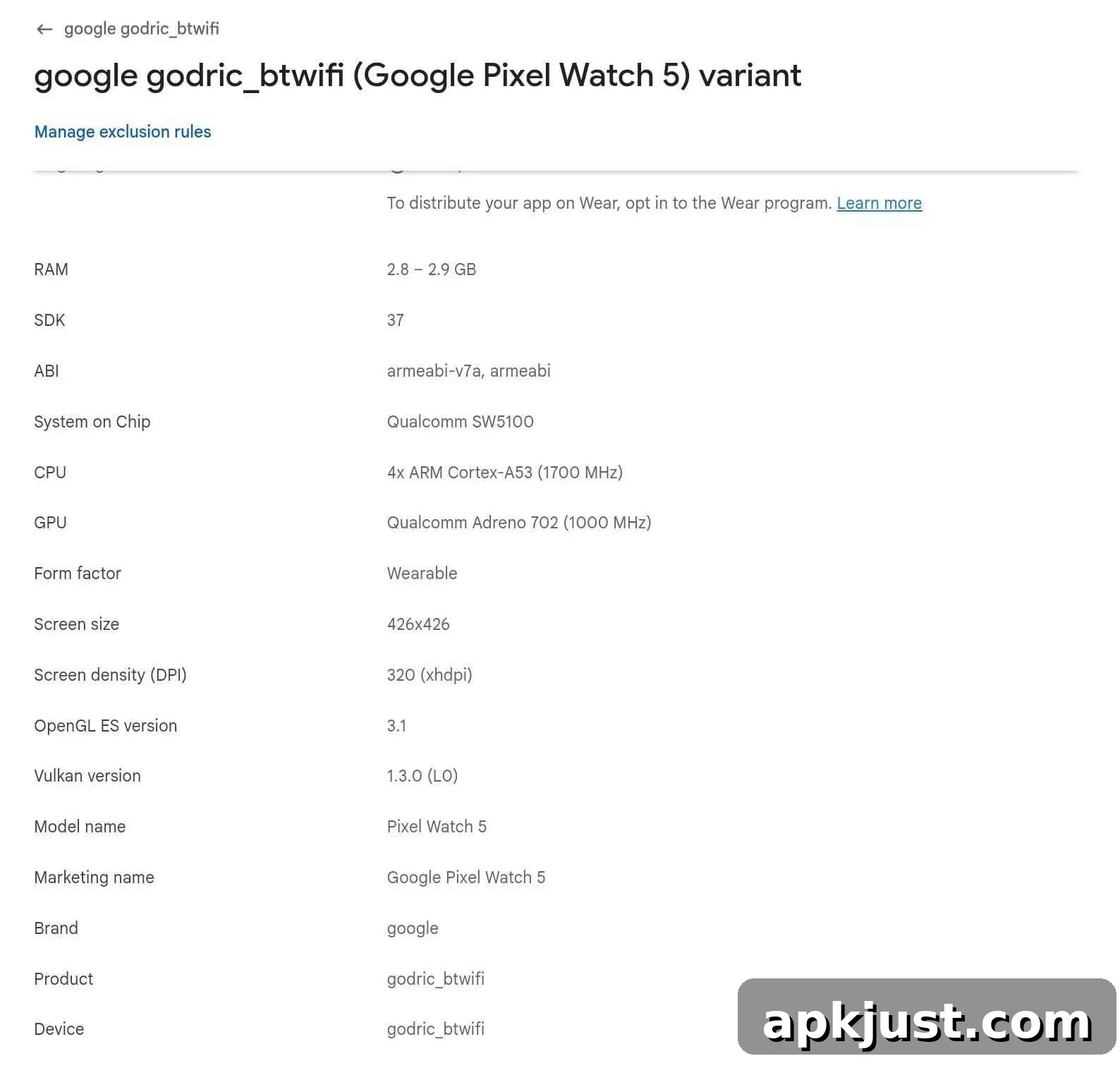
In the Play Console, the Pixel Watch 5 is listed under the internal codename “godric.” That naming follows the pattern of internal codenames used for earlier Pixel Watch releases and likely serves as a development identifier rather than a public brand name. The console listing provides useful hardware data that helps clarify what to expect from the wearable.
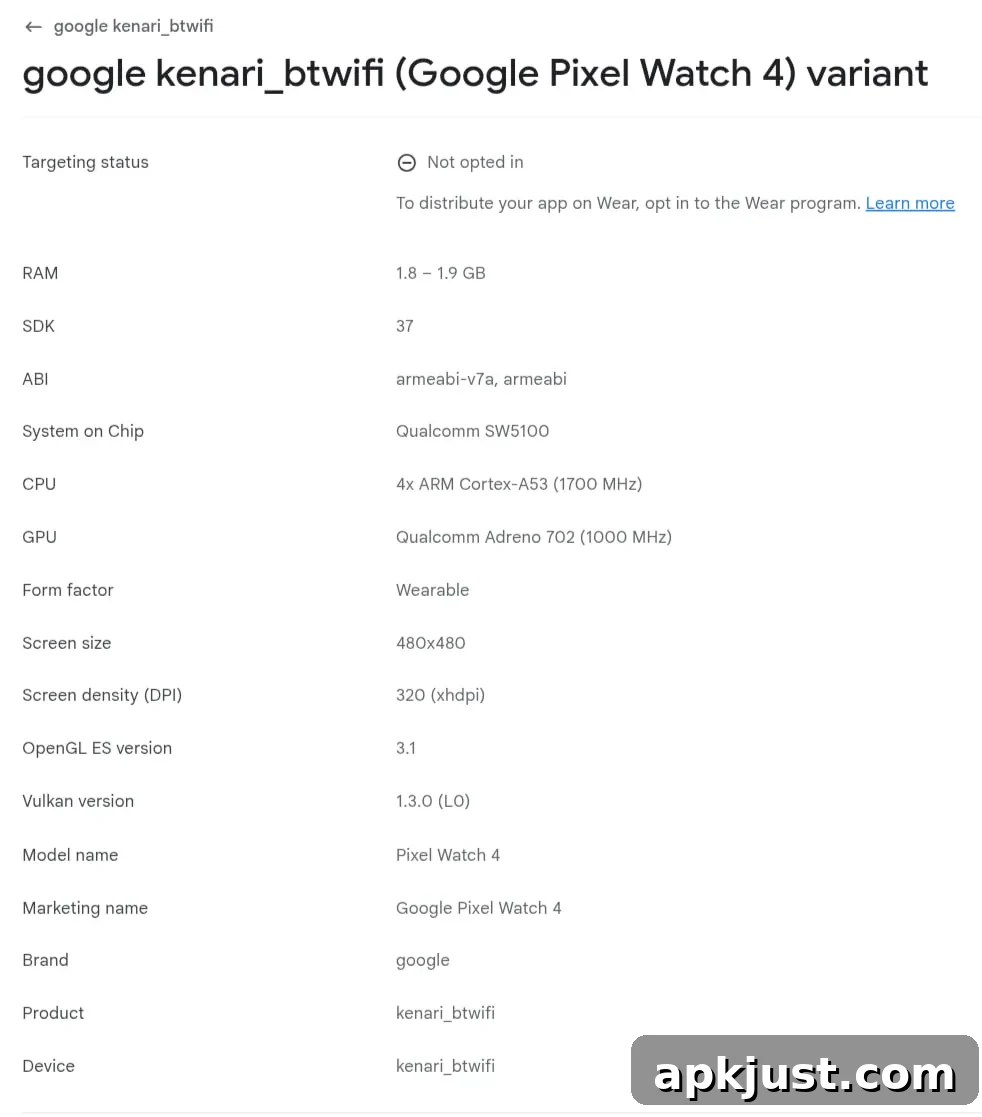
According to the listing, the Pixel Watch 5 uses a Qualcomm part identified as the “Qualcomm SW5100.” Based on the available details, this appears to be the same base platform found in recent Pixel Watch models. The reported CPU and GPU specifications match those used previously:
- CPU: 4x ARM Cortex-A53 (1700 MHz)
- GPU: Qualcomm Adreno 702 (1000 MHz)
To put that in context, Google moved to the 4nm Snapdragon W5 Gen 1 platform with the Pixel Watch 2, and later introduced the W5 Gen 2 in the Pixel Watch 4, where the upgrade enabled features such as Satellite SOS and a more capable co-processor that moved from an ARM Cortex-M33 to an M55. The Play Console entry for the Watch 5 does not disclose the co-processor details, so there is still a possibility Google updated that component even if the primary application processor appears unchanged.
The apparent reuse of the same application processor does not automatically mean the Pixel Watch 5 will feel identical in daily use. Firmware optimizations, updated co-processors, improved power management, and software-level enhancements can all produce meaningful changes in responsiveness and battery life. Still, many buyers and critics will compare raw platform changes with rival devices, especially where competitors are adopting newer, more powerful silicon.
For comparison, some leading smartwatches from other manufacturers have moved to more advanced nodes and architectures. Recent flagship wearables from competitors have been reported to use smaller process nodes and newer CPU cores, which can offer better single-thread performance and improved power efficiency. How Google positions the Pixel Watch 5 in this landscape will depend on the hardware balance it strikes and the software features it brings to Wear OS.
One notable upgrade shown in the listing is an increase in system memory. The Pixel Watch 5 appears to include 3 GB of RAM, up from the 2 GB used in earlier Pixel Watch models. This increase is the first major RAM boost since Google entered the wearables market and may be intended to support new on-device AI features, smoother multitasking, and improved background processing for apps. Expanded RAM could also help enable advanced assistant features and AI-driven experiences without relying entirely on cloud processing.
The listing also includes imagery consistent with previous leaks: a watch design similar to the current generation and a new analog-style watch face that reflects Google’s evolving design language for its assistant and on-device intelligence. That watch face uses visual cues tied to the company’s Neural Expressive motif, hinting at tighter integration between on-device AI elements and the watch interface.
Until Google provides an official announcement, details such as the exact co-processor, battery capacity, and any new sensors remain unconfirmed. However, the Play Console entry gives a clearer picture of the platform choices Google is making for the Pixel Watch 5. If the company prioritizes software-driven features and AI enhancements, retaining a familiar application processor while upgrading memory and software could be a deliberate strategy to deliver new capabilities without radically changing hardware.
Thanks Noah