
At IFA 2026, Philips Hue unveiled an expanded lineup for its Play lighting ecosystem, introducing more accessible sync solutions, new gradient strip options for large TVs, and a partnership with Nanoleaf that brings greater compatibility between popular modular lights and the Hue platform. The company also confirmed important software updates for the Hue mobile apps, including backup and restore and new Custom AI Behaviors to simplify advanced automations.
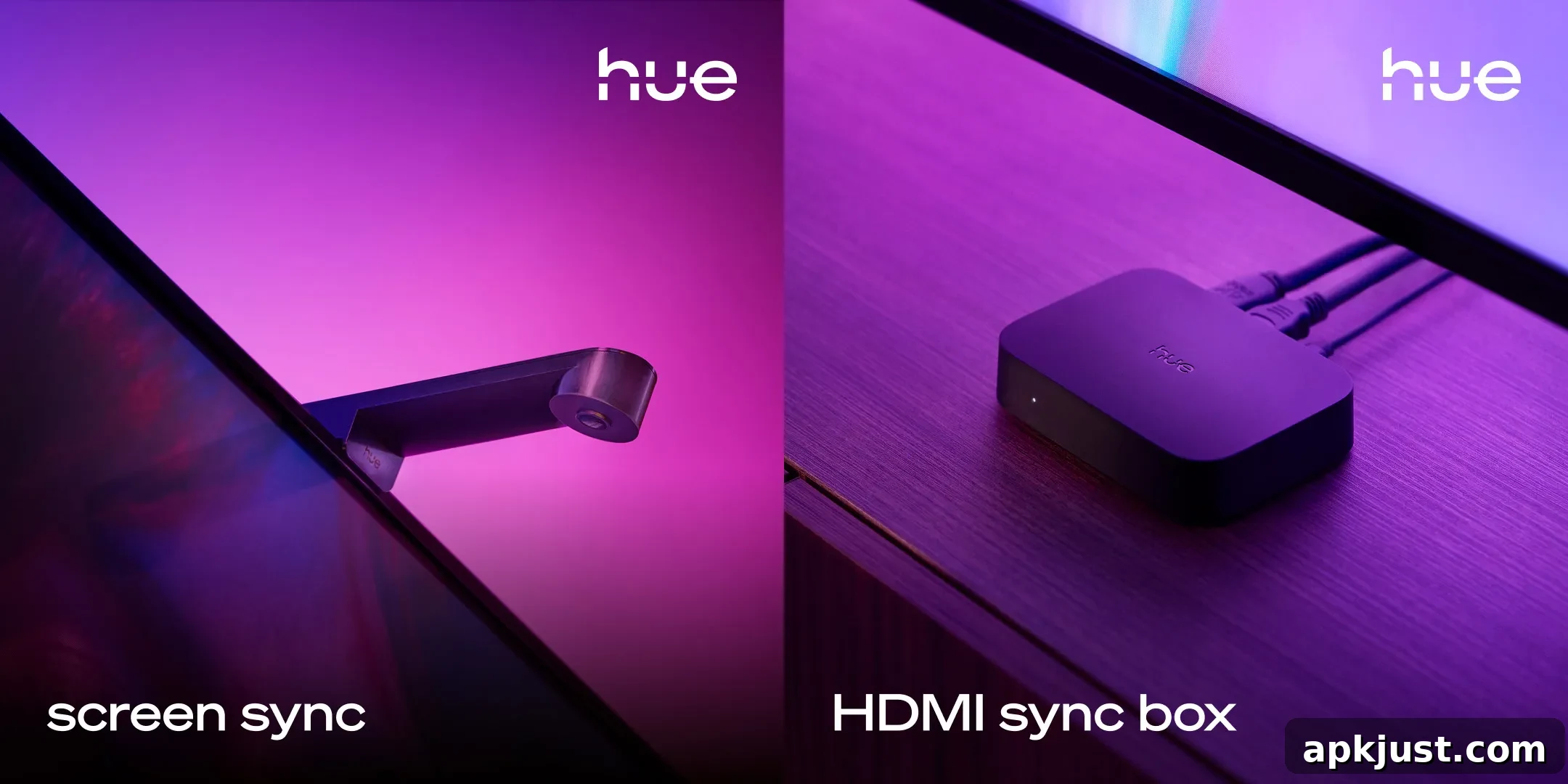
The flagship announcement was the Philips Hue Play Screen Sync 8K and two new, more affordable Play sync options designed to broaden access to immersive lighting for home theaters and living rooms. While the Play HDMI Sync Box 8K remains a premium device for serious home cinema enthusiasts, Philips Hue recognized the demand for less expensive alternatives that still deliver synchronized ambient lighting tied to on-screen content.
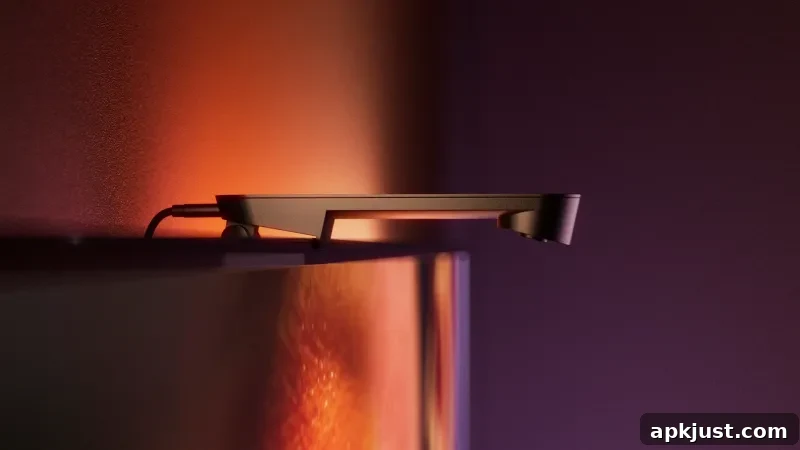
One of the notable additions is a camera-based solution called the Philips Hue Play Screen Sync. This compact unit uses a single fisheye camera mounted atop the television to capture on-screen colors and translate them into synchronized Hue lighting. Because it analyzes the TV image directly, the Screen Sync works with native streaming apps and any input source displayed on the screen, avoiding the HDMI limitations that affect traditional sync boxes. For many users, this approach offers a flexible and cost-effective way to achieve immersive ambient lighting without rerouting HDMI connections.
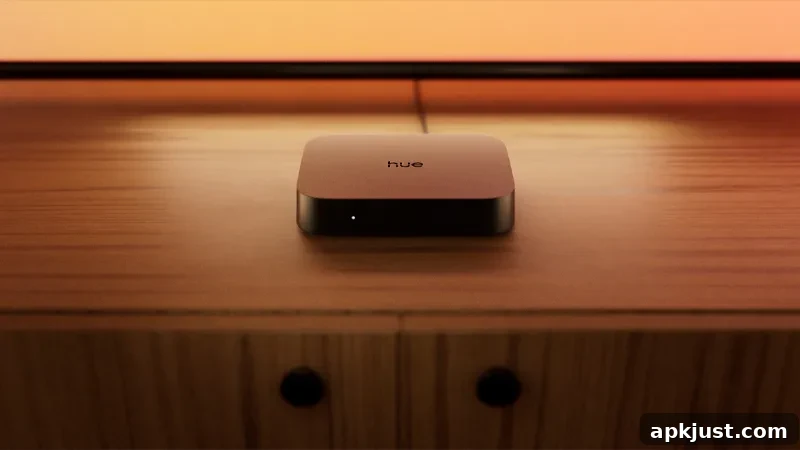
Complementing the camera-based Screen Sync, Philips Hue introduced the Play HDMI Sync Box 4K. Positioned as a middle-ground option between the entry-level camera solution and the top-tier 8K HDMI sync box, the 4K Sync Box offers HDMI-based color extraction with a single HDMI input. This model is especially well suited to setups that route a single source through an AVR or a single external media player, where multiple HDMI inputs are not required. It aims to deliver a balanced combination of quality and simplicity for users who want robust HDMI sync without the complexity or cost of larger multi-input sync boxes.
Both of the new sync models support Bluetooth-based pairing in addition to the traditional Hue Bridge connection. Bluetooth connectivity streamlines initial setup for users with smaller installations or those who prefer a simpler configuration path. For users who want to scale their system, the Hue Bridge and Hue Bridge Pro remain available and expand support to larger numbers of lights—enabling connections for up to ten lights or more complex entertainment lighting setups compared to a single light strip.
Philips Hue also announced new gradient strip lights tailored for entertainment spaces. These gradient strips are explicitly designed for large displays and are rated to work with TVs up to 100 inches. Gradient LED strips provide smooth color transitions along the length of the strip, enabling richer, more dynamic ambient effects that better mirror on-screen action and deliver an elevated immersive experience in living rooms and dedicated home theaters.
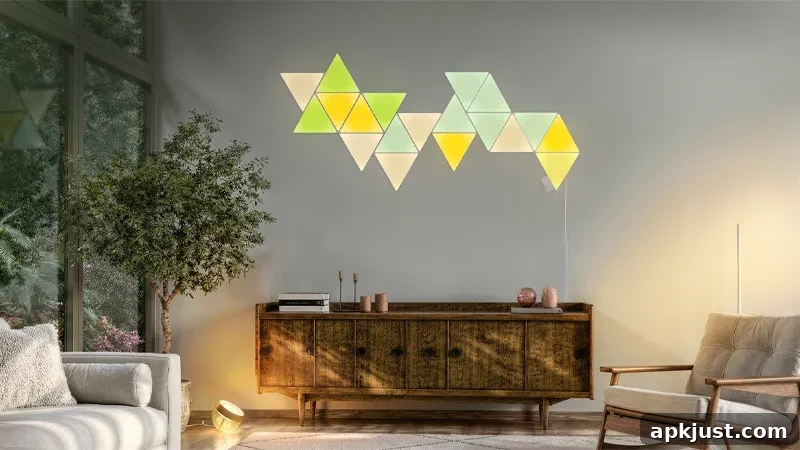
A key part of the IFA news was the new partnership between Philips Hue and Nanoleaf. The collaboration enables certain Nanoleaf shapes and wall light modules to integrate directly into the Philips Hue ecosystem. Compatible Nanoleaf panels and modules will be controllable through the Hue app and can participate in Hue scenes and automations alongside Hue bulbs, light strips, and other accessories. This expanded interoperability creates a more unified smart lighting experience, allowing users to combine Nanoleaf shapes with Hue fixtures for coordinated lighting effects throughout the home.
On the software side, Philips Hue confirmed two major updates arriving beginning in fall 2026. First, both the Android and iOS versions of the Hue app will gain backup and restore functionality. This will protect scenes, routines, room groupings, and automations in the event a user removes the app, replaces a phone, or needs to recover a configuration. Backup and restore addresses a longtime request from the Hue community for a reliable way to preserve personalized setups.
Second, the app will introduce Custom AI Behaviors—an automation feature that leverages natural language to create sophisticated, personalized lighting routines. Users will be able to describe desired behaviors and combine triggers, conditions, and lighting actions in a conversational way, making advanced automations more accessible without deep technical knowledge. These Custom AI Behaviors aim to speed up scene creation and enable richer, context-aware lighting scenarios that adapt to daily life.
Philips Hue confirmed pricing tiers for the new hardware: the Play Screen Sync camera-based unit starts at $119, while the Play HDMI Sync Box 4K is offered at $149. These new options are intended to lower the barrier to entry for immersive entertainment lighting, making Hue’s sync features available to a broader audience. Both devices are available through Philips Hue’s official channels and major retailers.
Overall, the IFA 2026 announcements emphasize accessibility, interoperability, and smarter software. With more affordable sync choices, larger gradient strips, Nanoleaf compatibility, and meaningful app improvements, Philips Hue continues to expand its ecosystem and make immersive, responsive lighting more practical for everyday consumers and home theater enthusiasts alike.