
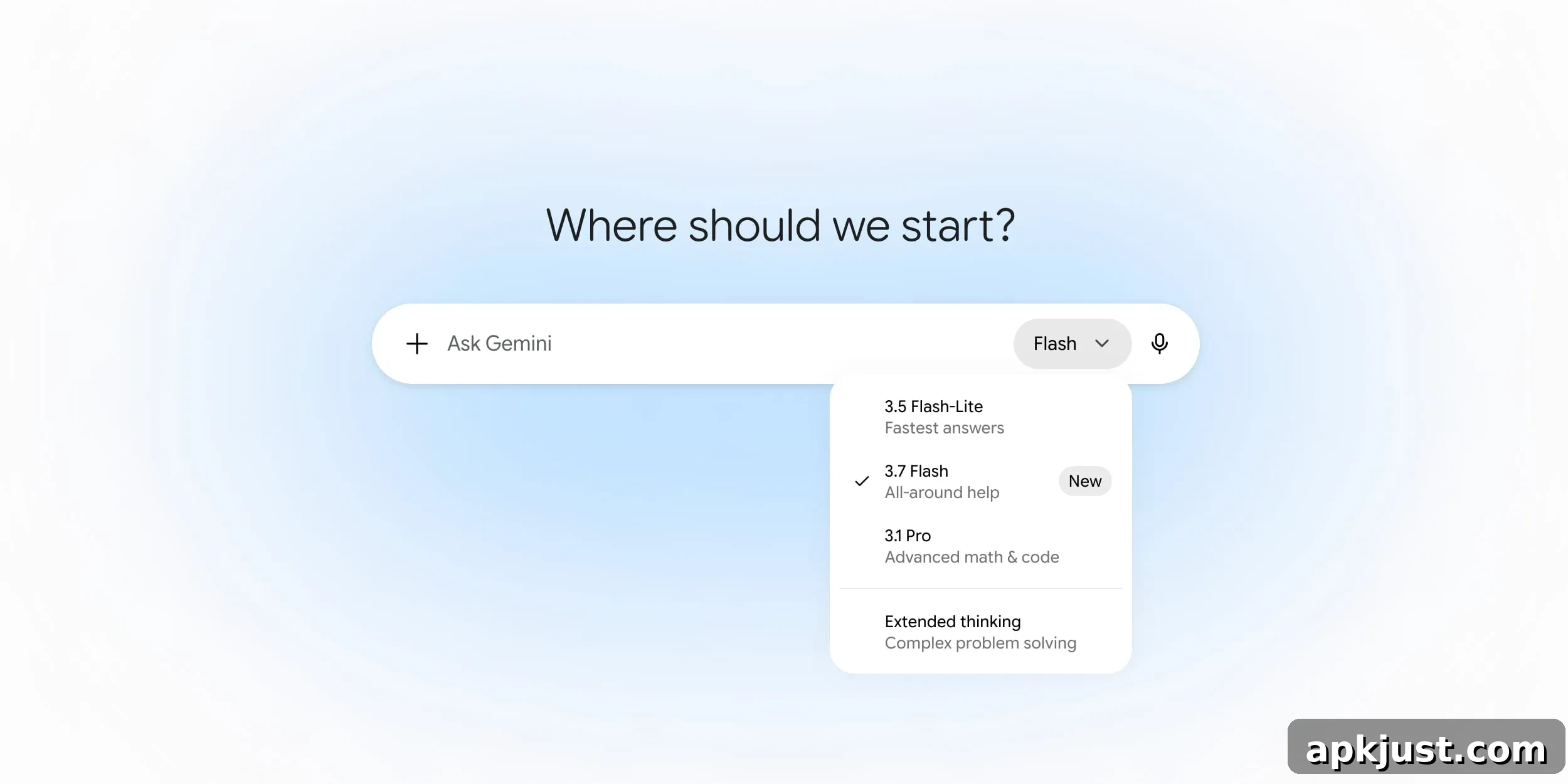
When Google released Gemini 3.7 Flash yesterday morning, the company initially described the update as powering the Spark agent inside the Gemini app. As of late Thursday, the 3.7 Flash model has been rolled out more broadly and is now selectable for general chats across Android, iOS, the web, and macOS, replacing the previous 3.6 Flash option in the model picker.
Gemini 3.7 Flash joins the existing family of models available to users, which currently includes 3.5 Flash-Lite and 3.1 Pro. The 3.5 Pro model did not receive an availability change during this release. Google highlights enhanced reasoning and accuracy in knowledge-dense domains such as finance, law, and biosciences, along with notable improvements in coding, web development, and user interface generation tasks. These refinements aim to make the model more reliable for specialized and technical queries while also improving output quality for everyday creative and productivity use cases.
Within Gemini Spark, the update to 3.7 Flash is intended to make personal agent functionality more efficient. Google specifically mentions improved tool use for Google Workspace apps, which suggests smoother interactions when the assistant performs actions like drafting emails, managing documents, or helping with calendar and collaboration tasks. These kinds of improvements are designed to reduce friction for users who rely on the agent for practical, workflow-oriented support rather than only conversational purposes.
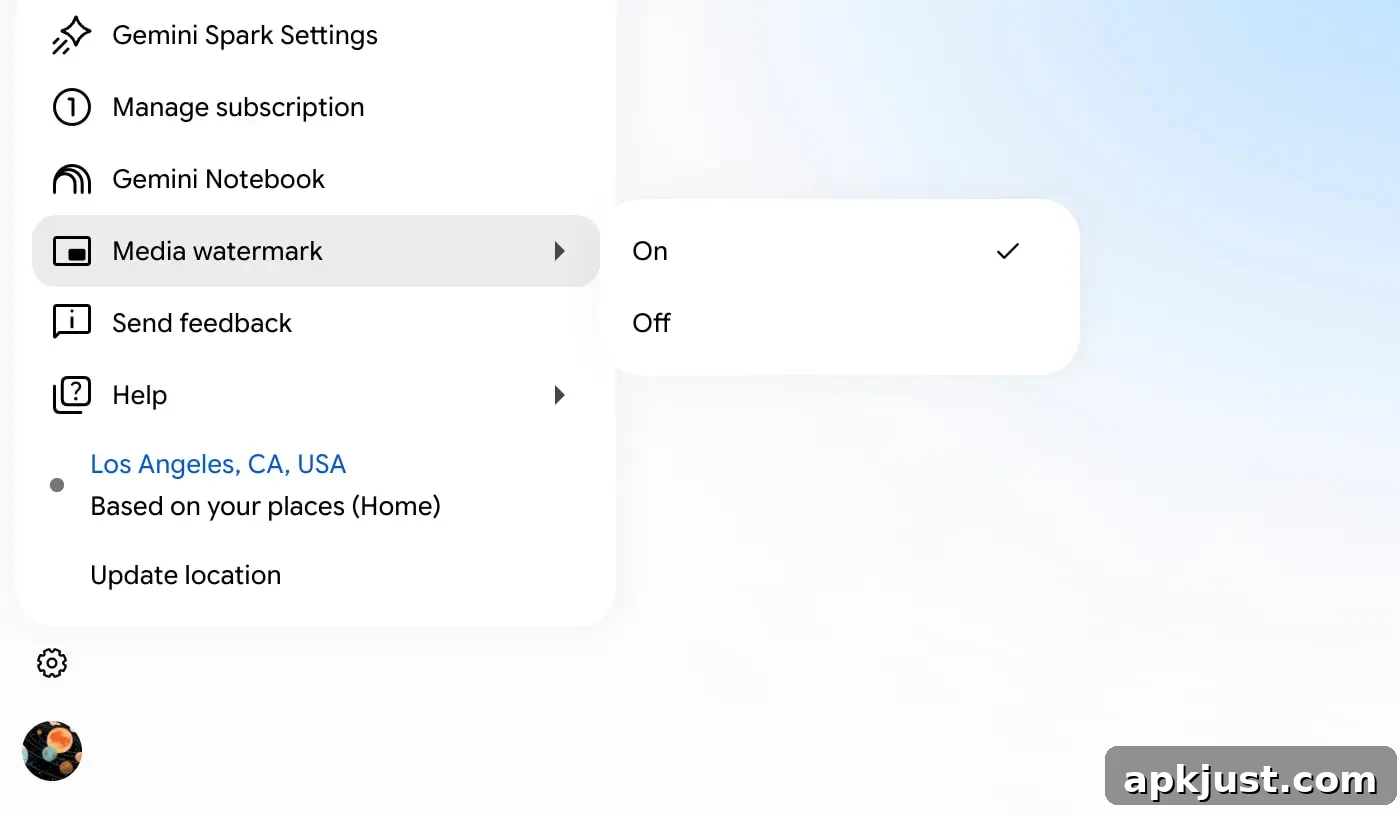
In addition to the model update, Google has implemented a visible watermark control in the Gemini app for generated media, a change that was previewed in July. Users can now disable visible watermarks that indicate content was produced by the model. The visible watermark appears as a corner spark icon in images (labeled Nano Banana), in videos (Omni), and in songs (Lyria). This new setting gives creators and consumers more flexibility over whether that visible mark is shown on generated outputs.
Google has made it clear that visible watermark removal is not available in jurisdictions where local regulations require visible attribution to be retained. Regardless of the visible watermark setting, the company continues to embed invisible SynthID watermarks and to include C2PA metadata in generated media. Those embedded markers and metadata are designed for provenance, detection, and accountability while remaining invisible to the end viewer.
Beyond the Gemini app, the watermark preference has been extended to Google’s Flow experience, with Search scheduled to receive the same control in a later rollout. On the web version of Gemini, the new setting can be found by tapping the settings gear icon in the bottom-left corner, where a dedicated “Media watermark” section provides simple “On” and “Off” options. The “On” option remains the default to preserve visible attribution for users who do not change their settings. Google is rolling this preference out to all supported platforms over the coming days, so users should expect to see the option appear progressively.
For users and organizations, these updates have several implications. The 3.7 Flash improvements in reasoning, accuracy, and code generation can make the model more useful for professional tasks that require precise, domain-specific knowledge. Enhanced integration with Workspace tools improves the assistant’s practical utility for everyday business workflows, potentially saving time on common tasks like drafting, summarizing, and editing documents. The watermark controls offer creators more visual control over their outputs, while the continued use of invisible provenance markers preserves traceability and compliance with detection frameworks.
As Google continues to refine Gemini models and features, users should monitor settings and release notes within the app to understand how new capabilities and controls affect their workflows and content. These updates reflect an ongoing effort to balance stronger model capabilities with tools for transparency and control around AI-generated media.