
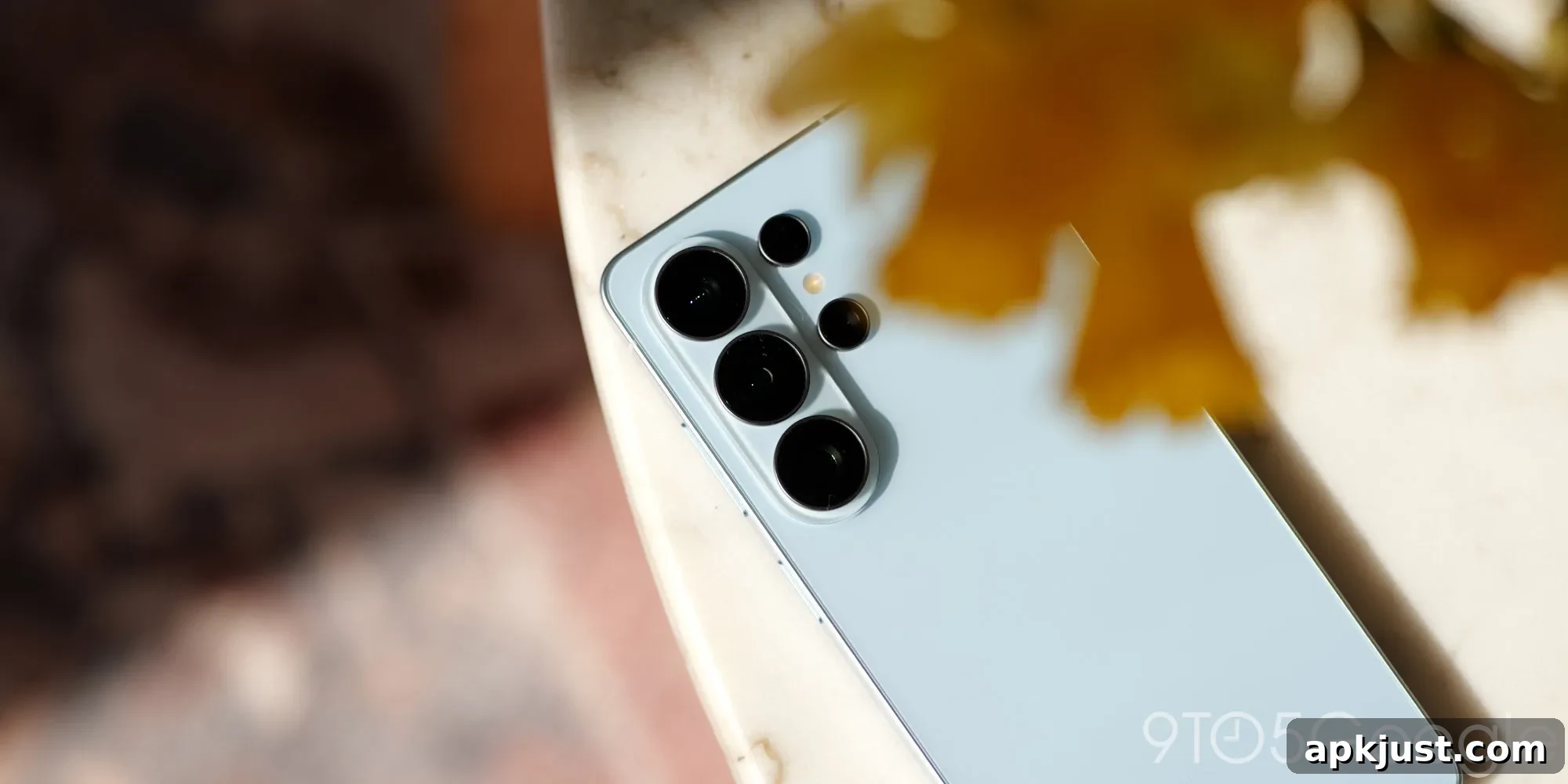
Another one bites the dust: early rumors that Samsung would revive its variable-aperture camera for the Galaxy S27 now appear to have been overstated. Reports indicate the company is effectively repeating last year’s strategy rather than bringing back the mechanical aperture system.
Samsung first introduced a variable-aperture camera on the Galaxy S9+ in 2018. That mechanism allowed the camera hardware to physically change how much light reached the sensor, giving photographers more direct control over exposure in certain situations. While the effect was never as dramatic as the aperture changes you get from a mirrorless or DSLR lens, it did provide some useful flexibility for shooting in varied lighting conditions.
Recent chatter suggested Samsung might revive that concept for the Galaxy S27 Ultra. The idea gained traction partly because rivals are experimenting with similar approaches and because mechanical aperture systems can be an attention-grabbing headline feature. However, the latest information suggests Samsung has decided against reintroducing a variable-aperture module for the S27 family.
ETNews reports that Samsung weighed the move after seeing indications that competitors might adopt comparable hardware, but ultimately factors like higher manufacturing costs and an increase in camera module thickness convinced the company to abandon the plan. Those are practical considerations: adding a mechanical aperture increases complexity, can make modules thicker, and raises production expenses at a time when margins and component sourcing are under significant scrutiny.
Cost and complexity are particularly relevant given the broader pressures in the smartphone market. Development budgets are being stretched as manufacturers try to keep feature lists competitive without dramatically increasing prices. The informal term “RAMageddon” has been used in industry conversations to describe the ripple effects of cost optimization across parts of a phone’s bill of materials — and camera components are often among the most expensive single subsystems. In that context, investing in a mechanical aperture that would only deliver modest image improvements may not have made sense for Samsung’s S27 roadmap.
There are also trade-offs in engineering and design. A variable-aperture system can add bulk and mechanical complexity, potentially affecting durability, water resistance, and internal layout. These consequences matter when manufacturers are balancing slim profiles, battery capacity, thermal management, and multi-camera setups. For the S27 series, Samsung appears to have prioritized other camera upgrades and overall design goals instead of resurrecting the mechanical aperture.
That does not mean Samsung is standing still on imaging. The Galaxy S27 lineup is still expected to debut with several camera refinements and sensor upgrades in other areas. Some rumors even suggest a reshuffle of telephoto modules on the Ultra variant, which could mean the removal of one telephoto lens in favor of larger sensors or improved computational photography. Whether those changes will be net improvements depends on how Samsung balances optical hardware with software processing.
For consumers, the takeaway is simple: a variable-aperture camera is unlikely to be a headline feature of the Galaxy S27 series. Instead, buyers can expect Samsung to focus on improvements that deliver more tangible returns for most users, such as sensor quality, image processing, and perhaps better low-light performance through software and sensor-level gains rather than mechanical complexity.
The Galaxy S27 family remains on track for an early next-year launch. As always, more details will emerge closer to the unveiling, and engineers may still make last-minute adjustments. For now, though, it looks like mechanical aperture hardware will remain a rare specialty feature rather than a mainstream comeback.
More on Samsung:
- Samsung’s Galaxy Buds are getting an FDA-approved hearing aid feature
- Galaxy Z Fold 8’s wider shape still survives bend test, teardown shows off titanium and poor Qi placement [Video]
- I hope Galaxy Z Flip 8 isn’t the last of its kind, but I can see why it might
Follow Ben: Twitter/X, Threads, Bluesky, and Instagram