
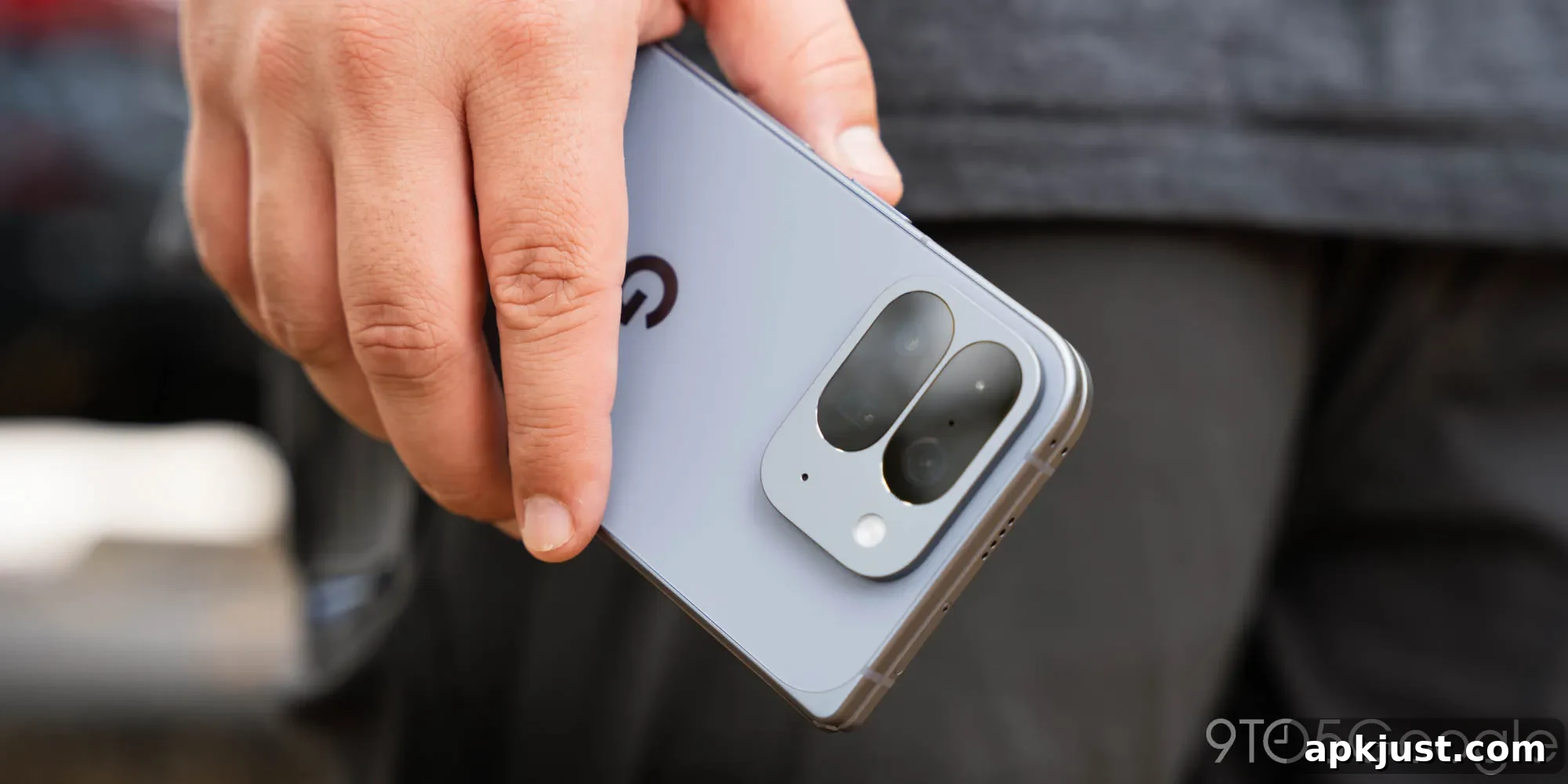
Chipset leaders such as MediaTek and Qualcomm experienced a noticeable decline in shipments in the first half of 2026 as more smartphone makers moved toward proprietary system-on-chip (SoC) solutions developed in-house. Google and Samsung, in particular, have accelerated their own chip programs, taking a larger share of the SoC market and reshaping vendor dynamics across the Android ecosystem.
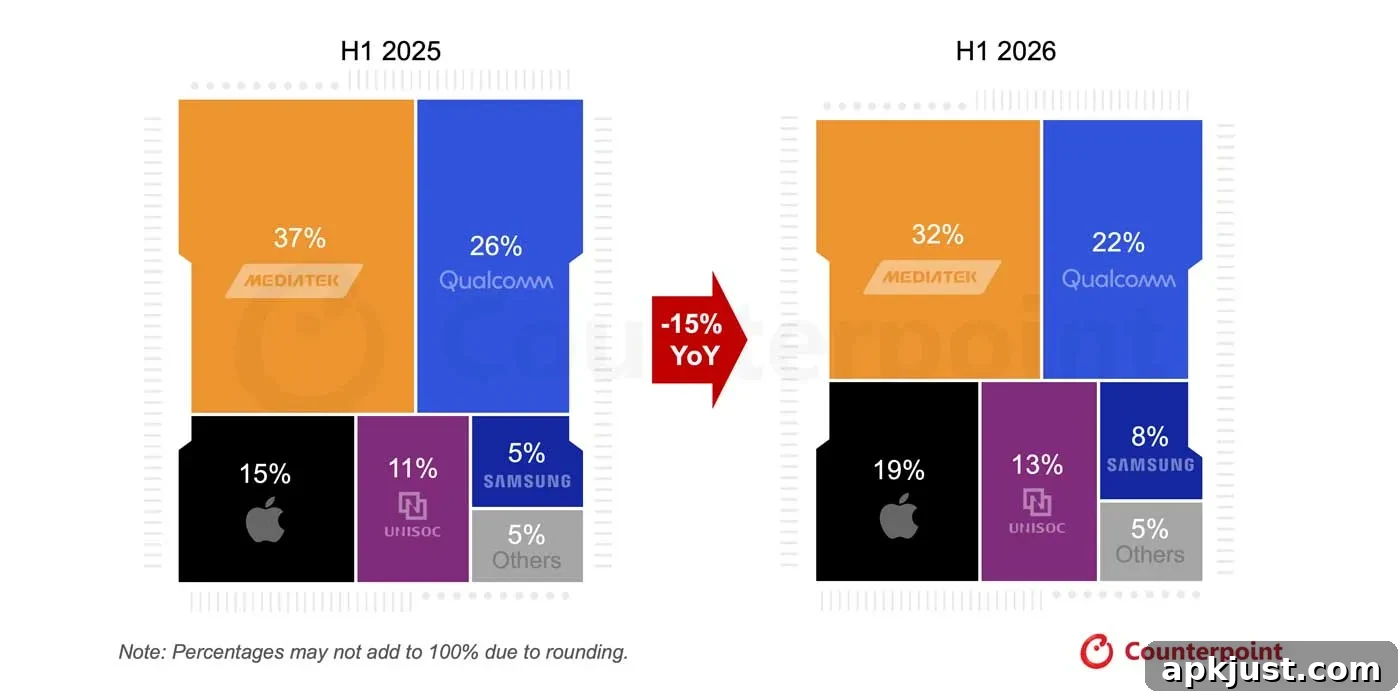
A recent report by Counterpoint Research comparing SoC shipments in H1 2025 to H1 2026 found an overall drop of roughly 15% year-over-year. That contraction reflects broader weakness in smartphone volumes and marks a shift in how handset makers allocate component sourcing and development budgets. As manufacturers pursue tighter hardware-software integration, the adoption of proprietary silicon has become a decisive factor in market share movement.
According to the data, MediaTek’s share of global SoC shipments fell from about 37% to 32%, while Qualcomm’s share moved down from 26% to roughly 22%. At the same time, chip suppliers such as Google, Samsung and UNISOC made measurable gains. The losses attributed to the companies behind the Snapdragon 8 series and the Dimensity lineup appear to have been spread fairly evenly across the industry, rather than concentrated in one vendor.
MediaTek and Qualcomm’s shipments declined by more than 25% YoY in H1 2026. Meanwhile, Apple, Samsung, Google and UNISOC posted sturdy shipment growth during the period, each for distinct reasons detailed below.
One major factor driving the change is rising memory costs. Components such as DRAM and NAND have surged in price over the past year, forcing manufacturers to adjust device pricing and profit margins. With memory costs climbing significantly, SoCs no longer dominate per-unit component expense in the same way they once did. That shift has encouraged OEMs to re-evaluate supply chains and, in some cases, to prioritize investment in customized silicon that can deliver better differentiation and long-term cost control.
The decline in SoC shipments aligns with broader market signals pointing to lower smartphone volume overall. Industry observers noted similar trends in reporting on global smartphone shipments earlier in 2026, highlighting that the decline was not isolated to chip vendors but affected multiple tiers of device makers and component suppliers.
A related development is the emergence of generative AI-focused chipsets. SoCs designed to accelerate on-device AI workloads — exemplified by Google’s Tensor family — are becoming a strategic priority for brands that want to deliver advanced AI features without relying solely on cloud services. That segment of the market actually grew, with AI-capable SoCs posting year-over-year shipment increases even as total SoC volumes fell. This underscores growing demand for phones that can run complex models and AI features locally, offering low-latency experiences and enhanced privacy.
The upcoming Pixel 11 series, for example, is expected to be powered by Google’s next-generation Tensor G6, following the Tensor G5 used in the Pixel 10 lineup. Samsung is also expanding its Exynos roadmap as part of a broader strategy to maintain vertical control over core hardware for some device tiers, even while it continues to use Qualcomm processors in flagship models like the Galaxy Z Fold 8 across many regions. These dual approaches reflect different strategic priorities: some manufacturers pursue in-house silicon for premium differentiation, while others balance performance, supply stability, and regional partnerships.
For smartphone buyers and industry watchers, the implications are meaningful. As OEMs invest more in custom SoCs, we should expect an increasingly fragmented but feature-rich landscape where AI capabilities and tight software-hardware integration become key selling points. At the same time, continued upward pressure on memory prices could constrain overall device affordability and slow shipment recovery.
Looking ahead, the balance between proprietary and third-party SoCs will shape competitive positioning across the smartphone market. Vendors that successfully combine efficient component sourcing with compelling, AI-driven user experiences are likely to gain an edge, while traditional chipset suppliers will need to adapt through partnerships, innovation, and focused customer support to maintain their relevance in a changing industry.