
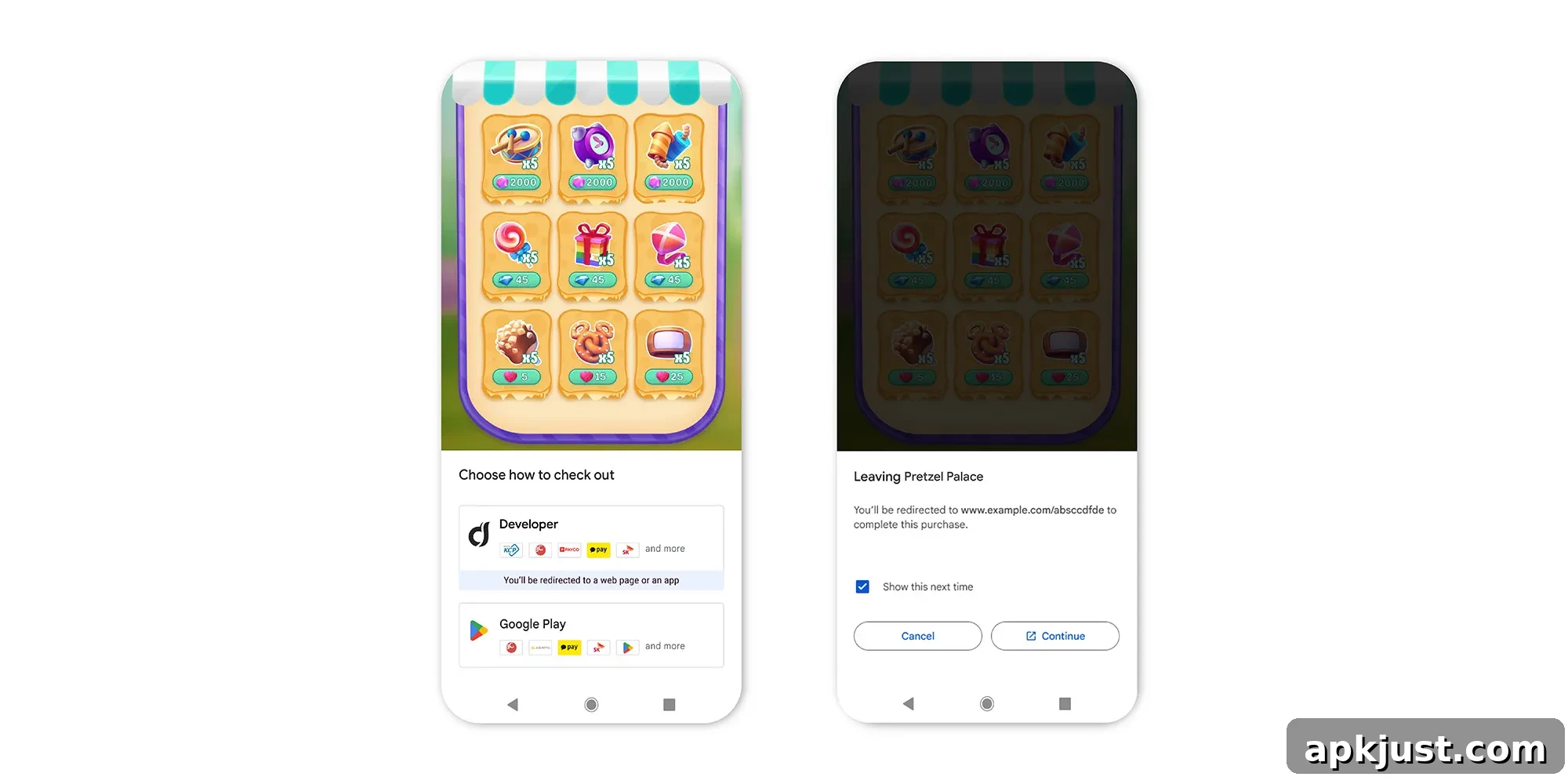
Google has announced that starting June 30 it will allow developers to offer external payment options in the Play Store in key markets including the US, the UK, and the European Economic Area. This marks a significant policy shift affecting how Android apps can accept payments and how fees will be applied.
The change follows a lengthy legal dispute that prompted revisions to Play Store billing rules. Under the updated policy, developers will be able to use alternative billing systems or provide external web links for payments while continuing to distribute apps through Google Play. The new rules and fee structure take effect on June 30 in the major markets named above.
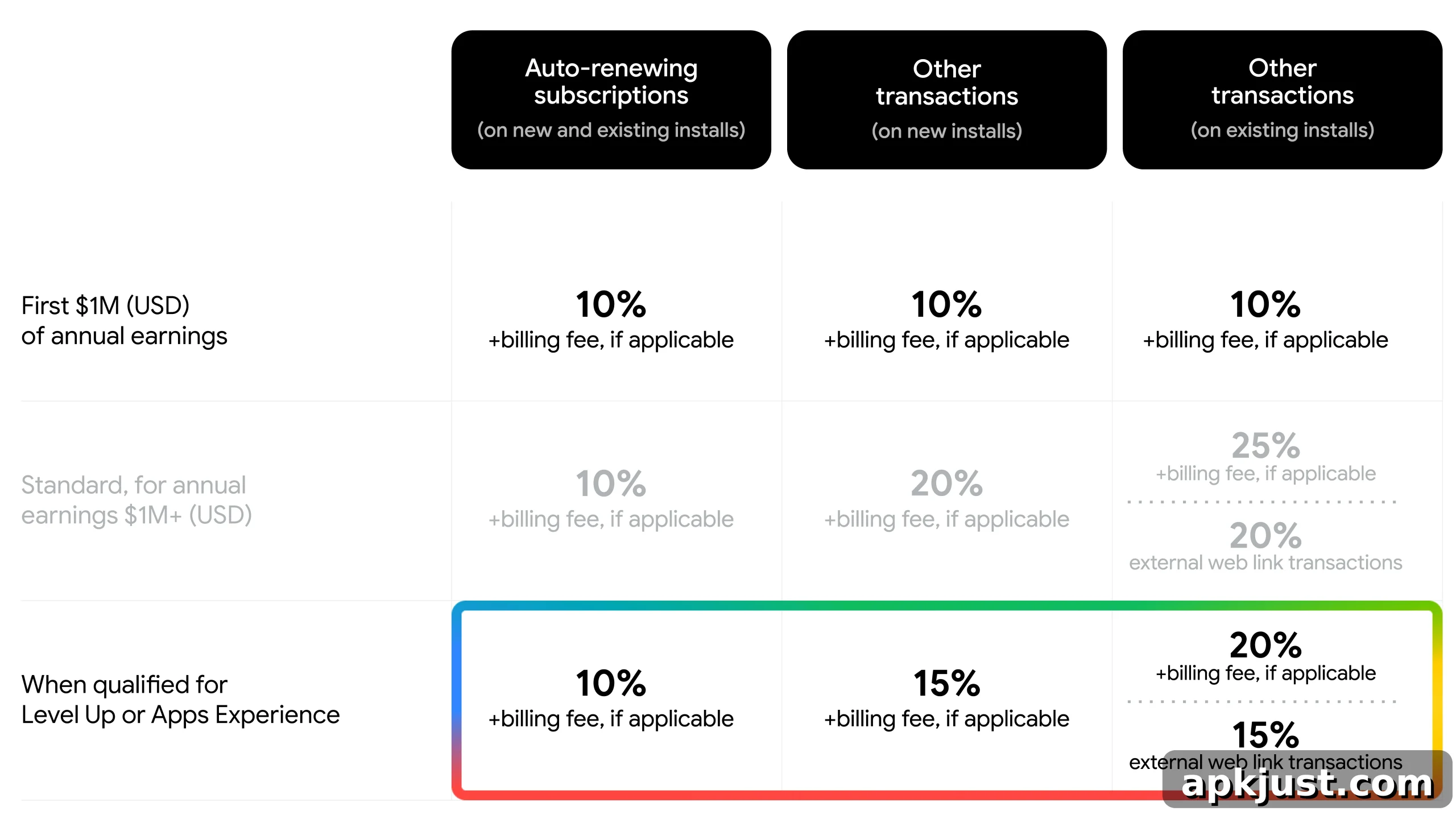
A central element of the new policy is a baseline service fee of 10% that applies to a developer’s first $1,000,000 (USD) in annual earnings, regardless of whether payments are processed through Google Play’s billing system, an alternate built-in billing solution, or external web links. That 10% rate also applies to auto-renewing subscriptions for the same first $1 million threshold.
Beyond the first $1,000,000 in annual revenue, service fees vary depending on the transaction type and whether the user’s install is considered “new” or “existing” relative to the regional rollout date. Google distinguishes between:
- New installs: transactions from users whose first install or first update of the app from Google Play occurred on or after the date that the new fee structure launched in their region.
- Existing installs: transactions from users whose first install or first update of the app from Google Play occurred before the new fee structure launched in that market.
For transactions that continue to use Google Play’s billing system, an additional billing fee applies in the US, UK, and European Economic Area. In those markets the billing fee is set at 5%. Google says it will provide details for billing fees in other markets at a later time. The additional billing fee does not apply to transactions routed through alternative billing systems or external web links.
Developers should expect the fee model to affect revenue planning and pricing decisions. The lower 10% rate for the first $1 million provides a reduced-fee entry point compared with the higher percentage rates that were common earlier in the Play Store ecosystem. After that threshold, the effective fees depend on whether a payment uses Play Billing and whether the transacting user counts as a new or existing install under the regional rollout definitions.
Google also notes that qualifying apps can receive further fee reductions through its program initiatives designed to reward higher-quality apps and broader device support. Fees are reduced for apps that meet requirements in Google’s developer programs that encourage better support for alternate Android form factors, improved app quality, and lower crash rates. Those program-specific benefits are set to activate later, with related changes rolling out in September.
For developers, the updated policy means new choices when integrating payment processing. Teams can continue to use Google Play Billing and accept the associated billing fee, or they can integrate alternative billing solutions or direct users to external payment links without incurring the Play billing fee. Each approach has trade-offs in terms of user experience, compliance, and fees, and developers will need to assess which option best fits their business model and user base.
From a user perspective, the availability of external payment options could lead to more diverse purchasing flows, though the user experience will vary depending on how individual apps implement payments. Developers will remain responsible for ensuring their chosen payment method complies with Google’s updated policy and any applicable regional regulations.
More on Android:
- Coverage of recent Play Store promotions and sales offering deep discounts on popular Android games.
- Details about the June 2026 Google system updates and how they affect Android devices and services.
- Progress updates on Android developer verification efforts and upcoming automation for verification tools.
Follow Ben on social platforms including Twitter/X, Threads, Bluesky, and Instagram for additional commentary and updates.