
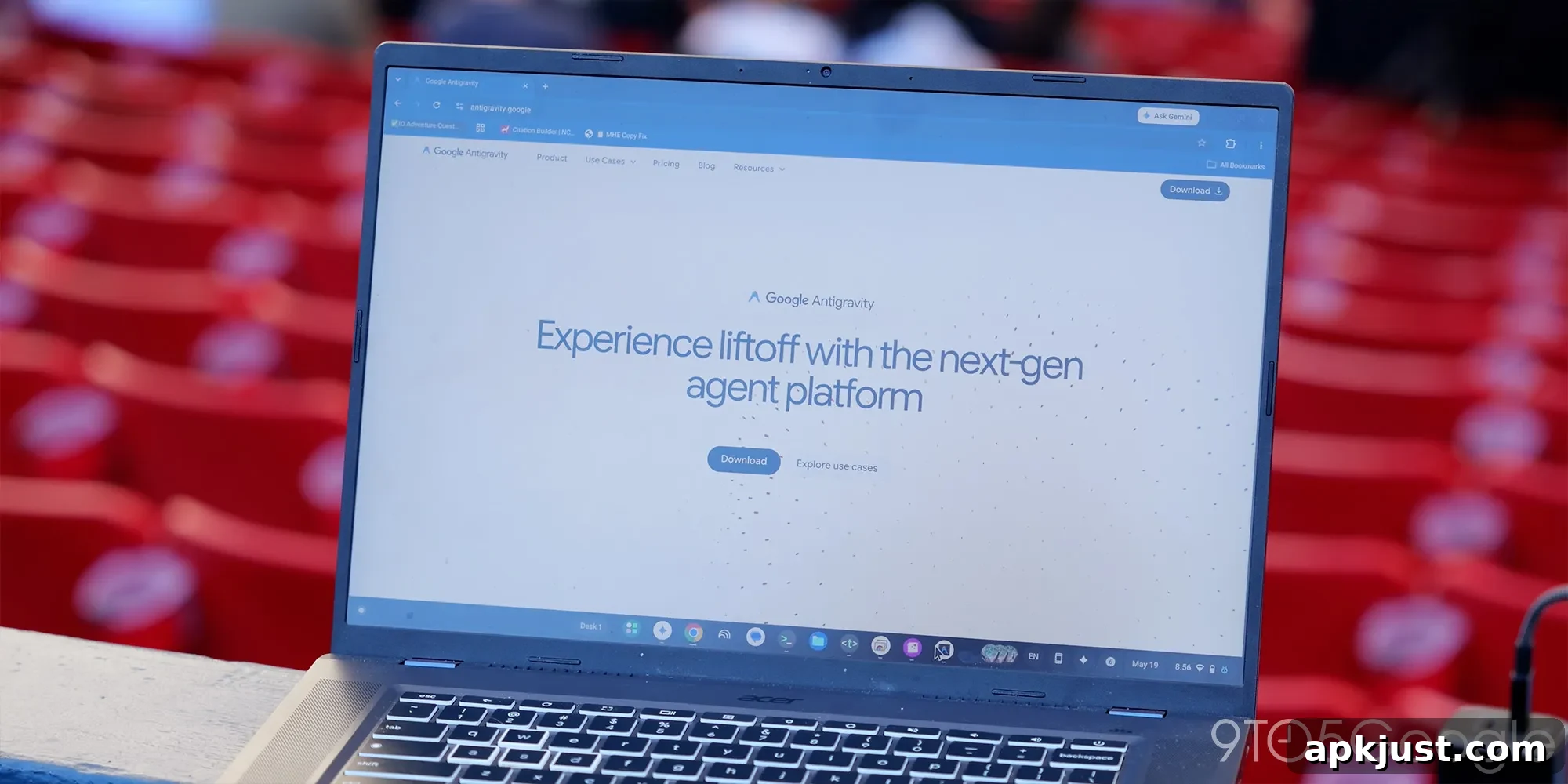
With Gemini 3.5 Flash delivering high-end capabilities at a much lower cost, Google has expanded its tooling to let developers build, run, and manage autonomous coding agents more easily. Antigravity 2.0 is the centerpiece of that effort, designed to orchestrate agent workflows and accelerate development, while AI Studio gains a dedicated Android app for capturing and iterating on ideas from anywhere.
Antigravity first appeared last year as a development environment that combined a familiar code editor experience with deep AI assistance. With the 2.0 update, Google has rebranded and refocused Antigravity as a unified platform for agent-driven coding. The update centers on agent orchestration, letting you run multiple agents in parallel so teams and solo developers can tackle several tasks at once and iterate faster.
A key part of the Antigravity update is tighter integration across Google’s developer ecosystem. Projects created in AI Studio can now be exported directly into the local Antigravity application, preserving context so you can pick up agent-led development where you left off. There are also new connections with Firebase and Android tooling, making handoffs between prototyping and production smoother.
For developers who prefer working in a terminal or their existing IDE, Google is introducing a new Antigravity CLI. This command-line tool lets you launch and manage agents without leaving your preferred environment. The Antigravity CLI will replace the previous Gemini CLI, so teams with existing agent workflows should plan to migrate to the new interface.
Developers can also create tailored agents with the Antigravity SDK, optimizing them for Gemini models and deploying them on infrastructure that fits their organization’s needs. To simplify deployment, Google is adding a Managed Agents option within the Gemini API that provides agents with an isolated Linux environment for safer, more predictable execution.
Running agentic workflows typically consumes more model capacity than single-turn chat interactions, so Google is adjusting its subscription options to match usage patterns. In addition to the Pro tier, Google is launching an AI Ultra tier at $100 per month with roughly five times the Antigravity usage limits of AI Pro. As a limited-time incentive during I/O week (through May 25, 2026), new and existing AI Ultra subscribers can claim $100 in bonus credits to help avoid interruptions if they hit their quota.
Taken together, these updates position Google to better serve developers who want to leverage advanced coding models like Gemini 3.5 Flash. That model delivers many capabilities previously reserved for top-tier frontier systems at a lower cost and with faster code generation. When you combine those speed and cost advantages with Antigravity’s ability to run multiple agents in parallel, prototypes and feature builds can move from idea to working code much more quickly.
Complementing the desktop and terminal tools, Google is also bringing AI Studio to Android with a purpose-built app. The mobile app is designed to let you speak or type ideas, start from polished example apps, and quickly iterate on concepts while away from your desk. It also adds a social layer by making it straightforward to share early builds with colleagues and friends. You can pre-register for the Android app in the Play Store.
Your next big idea is just a conversation away.
Inspiration doesn’t wait for you to be at your desk. It strikes on the couch, on the bus, or in the middle of the night. With Google AI Studio, you finally have a way to capture that spark and turn it into something real—right from your phone.
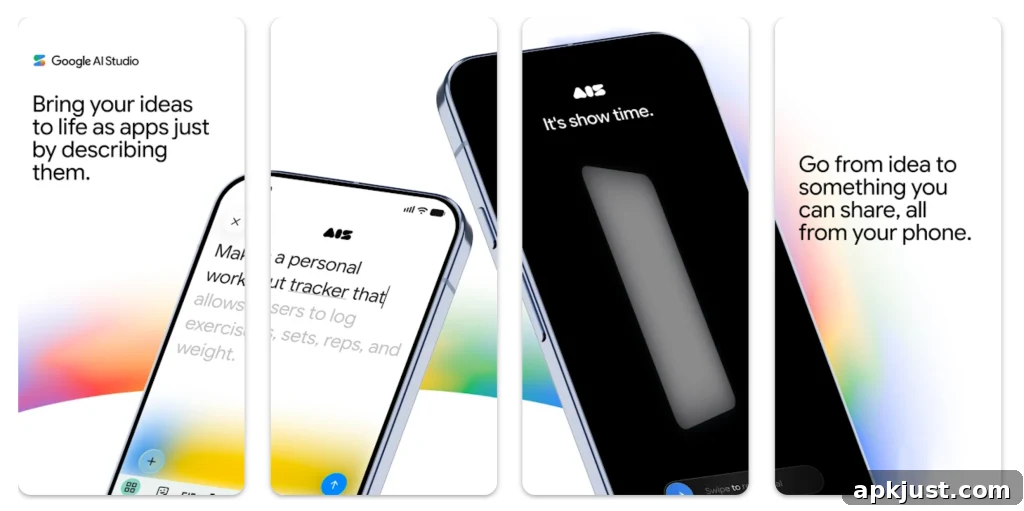
The combined workflow is simple and practical: sketch an idea in AI Studio on your phone, produce a working prototype, then export that project to Antigravity to launch multiple agents for refinement, testing, and integration. This approach shifts parts of development away from manual coding toward high-level direction and project management—coordinating a team of Gemini-powered agents to build and polish applications.
For teams and individual developers alike, these changes aim to reduce friction between ideation and execution. By offering exportable project context, a unified CLI, a customizable SDK, and managed execution environments, Google is making it easier to adopt agent-based workflows while keeping control over deployment and costs. As AI models continue to improve, these tools will help translate faster model outputs into usable software more reliably and at scale.