
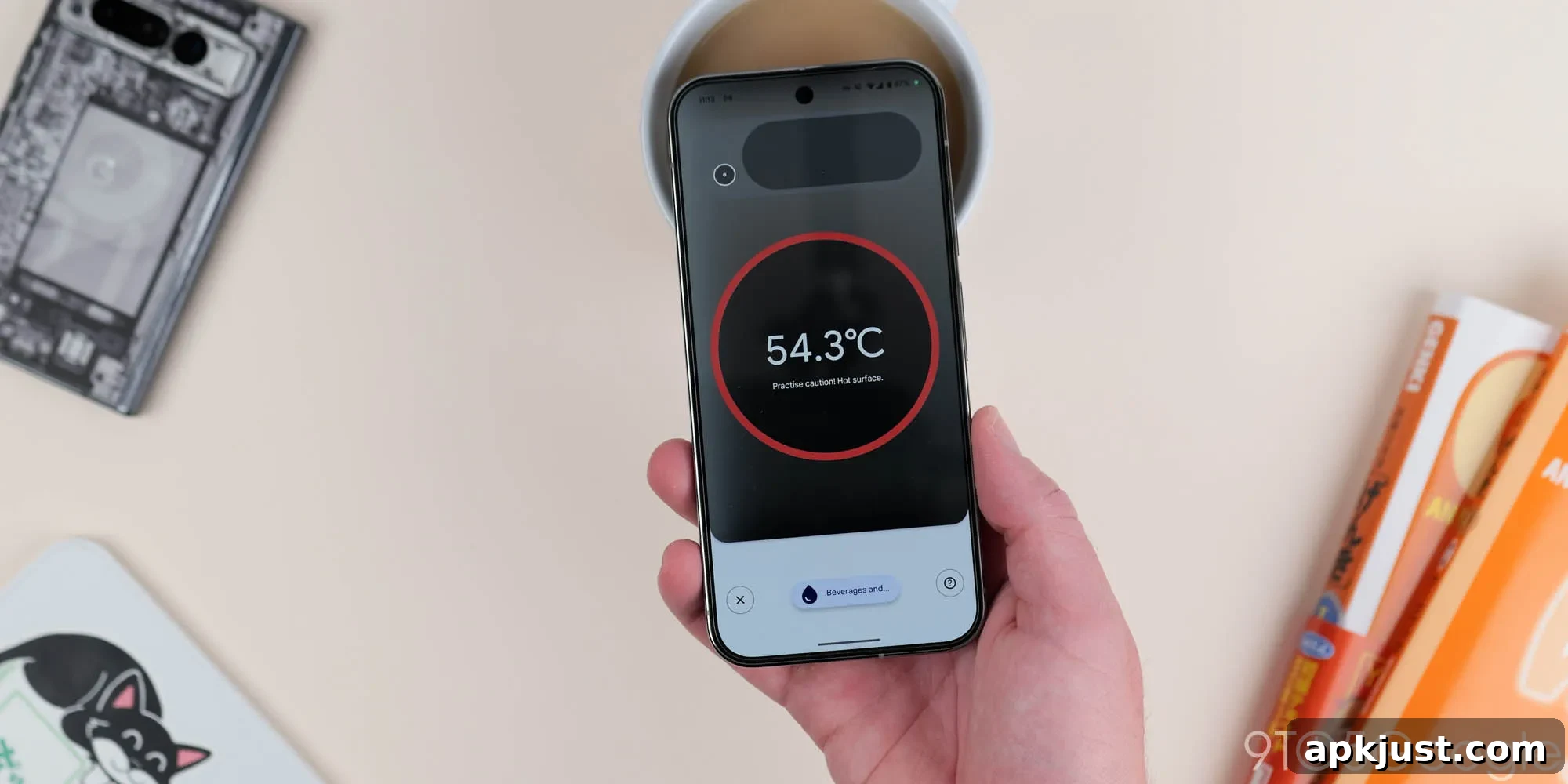
After three generations, Google appears to be retiring the built-in temperature sensor that debuted on the Pixel 8 Pro.
When Google introduced the Pixel 8 Pro in 2023, one of the most talked-about additions was a dedicated temperature sensor and a companion app that turned the phone into a surface thermometer. At the time, the feature felt experimental: useful in narrow scenarios, but lacking clear everyday applications. Early reviews described it as an odd, niche novelty rather than a breakthrough. Google later expanded the thermometer’s capabilities to include body temperature readings, but the sensor never became a major selling point. It remained a low-profile feature through the Pixel 9 Pro and Pixel 10 Pro models, and user engagement appeared limited.
Hints that the sensor might be phased out began to surface as design leaks for the Pixel 11 Pro showed a single cutout in the camera bar instead of the two cutouts found on recent Pro models. That change was the first visual clue suggesting the sensor might be gone. Recent hands-on details and spec leaks strengthen the impression that Google has decided to remove the temperature sensor from the upcoming Pixel 11 Pro lineup.
According to the leaks, Google is reallocating space on the rear of the phone for a feature reportedly called “Pixel Glow.” This addition consists of rear-facing LEDs designed to provide new visual effects and notifications, and it appears Google prefers the physical space for that hardware over retaining the thermometer module. Reports indicate both the Pixel 11 Pro and Pixel 11 Pro XL will omit the temperature sensor. The information also mentions the Pixel 11 Pro Fold will include the new Glow LEDs, while the standard foldable Pixel models historically have not included a dedicated thermometer.
It’s worth noting that until Google makes an official announcement, these details remain unofficial. However, the combination of design changes and repeated leaks makes it increasingly likely that Google is moving on from the temperature sensor experiment. From a practical standpoint, the decision makes sense: a hardware feature with limited adoption and unclear everyday value is a natural candidate for removal, especially if the space can be used for more broadly appealing hardware innovations.
For users who did find a use for the sensor, its removal may be disappointing. For most people, though, the impact is probably minor—many Pixel owners never engaged with the feature beyond curiosity. As with many smartphone features, Google will likely weigh user engagement and real-world utility heavily when deciding whether to keep or drop niche sensors in future models.
The evolution of Pixel hardware highlights a broader trend in smartphone design: manufacturers experiment with new sensors and capabilities, but only those features that deliver clear, recurrent value tend to become long-term staples. Elements that feel gimmicky or see low usage are often replaced by more universally useful hardware or by software-driven features that do not require dedicated sensors.
What are your thoughts? If you owned a Pixel with the built-in thermometer, did you find it useful, or was it something you tried once and then forgot about? Share your experience—knowing how real people used the tool helps explain why companies choose to keep or retire certain features.
More on Pixel 11:
- Pixel 11 leak reveals new camera hardware, Tensor G6 details, more specs
- Google Pixel 11 reportedly gets Samsung’s new flagship display ahead of iPhone
- Pixel 11 Pro XL leak is the most boring one yet, very little changes [Gallery]
Follow Ben: Twitter/X, Threads, Bluesky, and Instagram